
 BACK
BACKDisasters strike without warning. Wildfires, floods, structural collapses, and large-scale accidents vary widely in type and scale, but they all share one common starting point: communication. Just as critical is the record of how that communication unfolded—documentation that makes accountability and systemic improvement possible after the fact. This is where the PS-LTE–based public safety network and the LARS recording solution come into play. We spoke with Kang Jung-hoon, Deputy General Manager at XCURENET, about the structure of disaster communications and the role of recording systems.

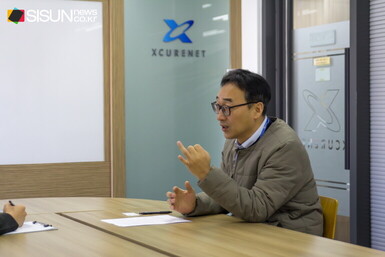
Kang Jung-hoon, Deputy General Manager at XCURENET [SISUNNEWS DB]
Q. Why are “communication records” so important in disaster-response settings? Could you start with the basics?
A. When a disaster occurs, multiple public agencies—police, fire services, the military, and local governments—are mobilized simultaneously. The most critical issue in that process is understanding how information was shared and what decisions were made, and when.
In the aftermath of the Sewol ferry disaster, this awareness led to the establishment of a PS-LTE–based public safety network. This network is not merely a communications system; it incorporates a range of technical features designed to maintain connectivity even during emergencies. These include IOPS, which keeps local communications running if base stations are disconnected; MCPTT for mission-critical voice communications at disaster sites; ProSe, which enables direct device-to-device communication; and GCSE, which supports group communications. In this environment, communication records go beyond simple “recordings”—they become the foundation for reviewing and assessing the entire disaster-response process.
Q. Could you elaborate on the core technologies behind the PS-LTE public safety network?
A. IOPS—Isolated E-UTRAN Operation for Public Safety—is a standalone base-station operation mode. Even if the connection between a base station and the core network is severed during a disaster, the base station can continue operating independently to maintain communication among devices. You can think of it as a mobile base-station concept.
MCPTT, or Mission Critical Push-to-Talk, is an essential radio-communication technology used in disaster response. Like traditional analog radios, it allows users to communicate instantly at the push of a button, while also supporting group calls, emergency alerts, and priority communications over an LTE network. ProSe, or Proximity-based Services, enables direct device-to-device communication without a base station, while GCSE—Group Communication System Enablers—provides the underlying technology for group communications, allowing not only one-to-one but also one-to-many communication.
LARS [Provided by XCURENET. Unauthorized reproduction and database use prohibited]
Q. How does PS-LTE–based MCPTT differ from traditional radio systems?
A. Conventional radio systems are narrowband, voice-centric, and largely one-way. Information can be lost in transmission, and messages may be interpreted differently depending on who is speaking. PS-LTE–based MCPTT, by contrast, is built around group communication. When one person speaks, everyone involved hears the message at the same time. Rather than information being relayed step by step, the situation can be shared instantly in a single transmission.
Because it is LTE-based, the system also supports not only voice but video (MCVideo) and data (MCData). This significantly improves situational awareness and the accuracy of on-site responses.
Q. What were the most significant limitations of legacy recording systems in the field?
A. In disaster situations, the most critical issue has always been communication outages. When base stations are damaged by wildfires or large-scale disasters, there are cases where no records are generated at all. That is why the public safety network was designed from the outset with redundancy and independent operation in mind—and why recording systems also need to operate within that same architecture.
Q. In this environment, what role does XCURENET’s LARS play?
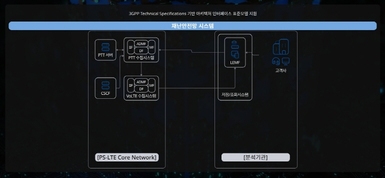
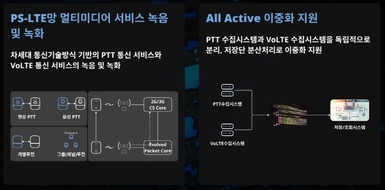
A. LARS is a system that records and captures communications occurring within the public safety network’s data center segment. Its core function is to preserve voice and video communications exchanged during disasters so they can be used as evidentiary material after the fact.
When multiple agencies are responding simultaneously on the ground, it becomes difficult to accurately recall who made which decisions, and when. LARS preserves that entire process as it happened, enabling an objective reconstruction later on. In the field, it is often described as playing a role similar to that of an aircraft’s black box.

Kang Jung-hoon, Deputy General Manager at XCURENET [SISUNNEWS DB]
Q. Could you explain LARS’s key features in a way that general readers can easily understand?
A. At its core, LARS provides recording and video capture. On top of that, it integrates STT (Speech-to-Text), which automatically converts speech into text, and CTA (Call Text Analytics), which analyzes the converted text.
STT automatically transcribes voice communications into text. In the past, personnel had to replay audio files and manually document conversations, a process that was time-consuming and prone to variation depending on who was doing the work. By using STT, voice data is automatically converted into text, improving both accuracy and efficiency.
CTA analyzes these transcribed conversations to help identify incident types and understand the overall flow of events in a structured way. Through keyword analysis and visualization of connections, it allows users to trace the sequence of events from the initial call to the final communication. For example, it can show when and by whom a keyword such as “fire” was first mentioned, and how it fit into the broader progression of the incident—visualized through graphs or linked structures.
Q. How do you assess the accuracy of speech recognition and its technical limitations?
A. Speech recognition is commonly evaluated using a metric called CER, or Character Error Rate. Accuracy can decline with regional dialects, variations in intonation, or when speakers trail off at the end of sentences. For that reason, we are looking beyond simple transcription toward approaches that analyze speech to generate summaries or adjust for context, improving overall visibility. At this stage, we believe machine-learning–level technologies represent the most realistic and practical approach.
Q. How is the system designed to record all types of calls, including group and individual communications?
A. The system is fundamentally designed around group communications. Group channels are configured based on the nature of a disaster, with relevant agencies joining those channels to communicate. From a technical standpoint, communication data delivered from the CSCF server is collected by a collection server and then passed to a logging server. Users access and review this information through a GUI-based interface. Regardless of whether the communication is a group call or a one-to-one call, the recording method remains consistent.
LARS [Provided by XCURENET. Unauthorized reproduction and database use prohibited]
Q. What are the core technologies that ensure recording is not interrupted, even in emergency situations?
A. The public safety network is built on a redundant architecture by design. Disaster response centers are divided into primary and secondary facilities, and the data centers themselves are also fully redundant. Within each center, equipment is configured in an active–standby setup, allowing the standby system to take over immediately if an issue arises. This is further supported by UPS systems for power outages, ensuring that recording continues uninterrupted even during disaster conditions.
Q. Given the sensitive nature of these communication records, security and access control must be critical concerns.
A. The public safety network is designed around redundancy from the outset. Disaster centers operate as primary and secondary sites, with both data centers and equipment running in active–standby configurations. UPS systems are also in place to handle power failures. From a security standpoint, access is strictly limited to authorized personnel, and there are no backdoors. The network is built using a tunneling structure—similar to a VPN—which makes external access difficult. Like a VPN, it uses dedicated channels and IP ranges that are separated from general communication paths. Importantly, the data centers themselves are subject to strict physical access controls, further strengthening overall security.
Q. Is the system adaptable to areas with limited connectivity or to future technology environments?
A. The public safety network operates on dedicated base stations, while network-sharing policies are also being implemented to address cost considerations. Over the longer term, direct-to-cell satellite communication is becoming technically feasible as well. However, regardless of whether the communication method is LTE, 5G, or satellite-based, voice data ultimately converges at the data center. As a result, LARS’s fundamental role remains largely unchanged.
Kang Jung-hoon, Deputy General Manager at XCURENET [SISUNNEWS DB]
Q. How do you see disaster communications evolving beyond PS-LTE?
A. At present, LTE represents the most balanced option in terms of coverage range and stability. That said, as data demands increase, a transition to PS-5G is also possible. Because base-station deployment requires significant cost and time, such a shift is unlikely to happen in the short term. Looking ahead, technologies such as VLMs—visual large models—may gradually come into focus, enabling automated situation recognition by analyzing video data and converting it into alerts.
Q. Are there real-world cases where local governments or public agencies are already using LARS?
A. LARS is currently deployed and operating at the primary and secondary data centers of the public safety network, and it is also used in LTE-R–based railway networks. Communications recorded in these environments are utilized as post-incident evidentiary material. However, due to security considerations, specific call content or operational outcomes cannot be disclosed externally. These records fall under the authority of the operating agencies, and we do not have access to or the ability to use that information ourselves.
LARS [Provided by XCURENET. Unauthorized reproduction and database use prohibited]
Q. What do field users most frequently request?
A. Ultimately, it comes down to call quality. If the original audio quality is poor, it inevitably affects the quality of the recording as well. To address this, we are applying technologies such as noise reduction to improve overall clarity.
Q. What directions are you considering for the future advancement of LARS?
A. Our goal is to further enhance the STT and CTA functions so that users can obtain meaningful results with minimal manual effort. Public safety network equipment is typically replaced on a regular upgrade cycle, and we are reviewing ways to more fully implement these capabilities at those transition points. Over the longer term, we are also looking beyond voice to incorporate video data analysis, enabling a more multidimensional understanding of situations based on stored data.
Q. Finally, as the person in charge, what role do you hope LARS will play within the public safety system?
A. The most important priority in any public safety system is maintaining uninterrupted communication. At the same time, it is equally critical to accurately reconstruct and understand events after a disaster. By recording when decisions were made and what actions were taken, authorities can identify shortcomings and improve the public safety framework. I see LARS as playing an important role in enabling that post-incident analysis.
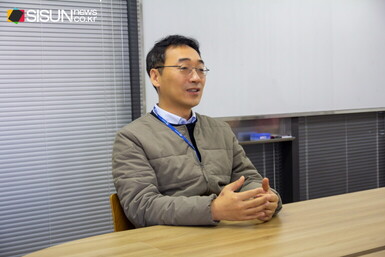
Kang Jung-hoon, Deputy General Manager at XCURENET [SISUNNEWS DB]
At the heart of disaster response is the ability to accurately preserve how decisions and directives issued in the field were carried through. This is why communication records matter—not to revisit past disasters, but to avoid repeating the same mistakes. Disaster response is not defined solely by visible actions such as deployments and rescues. Only when the flow of communication and the points at which decisions diverged are preserved as records does accountability become possible, along with meaningful institutional improvement.
In the end, while communication technologies may evolve, what must remain in disaster response is the record itself. The driving force behind advancing public safety systems lies in precise post-incident analysis. In this context, LARS—operating on the PS-LTE public safety network—represents a technology of record that makes it possible to look back, clearly and accurately, on what happened after a disaster.
[출처] 시선뉴스
